Growth Trajectory and Market Outlook of the Global Melamine Tableware Industry
author: Kingwell
2025-10-02

Executive Summary
The global melamine tableware market is poised for sustained expansion over the next decade, driven by stringent anti-plastic regulations, technological innovations, and booming demand from commercial and residential sectors. According to Global Info Research, the market was valued at USD 899 million in 2024 and is projected to reach USD 1.495 billion by 2031, registering a compound annual growth rate (CAGR) of 7.6%. This report analyzes the core growth drivers, regional dynamics, competitive landscape, and potential challenges shaping the industry’s future, highlighting why melamine tableware will consolidate its position as a preferred alternative to disposable plastics and traditional materials.
1. Core Drivers of Market Growth
1.1 Stringent Environmental Policies Globally
The phase-out of single-use plastics has emerged as the most powerful growth catalyst. The EU’s Single-Use Plastics (SUP) Directive, China’s "14th Five-Year Plan for Plastic Pollution Control," and similar regulations across 100+ countries mandate reusable, eco-friendly tableware in food and beverage establishments. For instance, 78.6% of Chinese chain restaurants increased their melamine procurement budgets in 2023, directly in response to national plastic ban policies. In the EU, aviation and fast-food sectors have achieved over 70% melamine penetration due to regulatory compliance requirements. These policies not only replace disposable plastics but also outcompete costlier alternatives like PLA (polylactic acid) tableware, which costs three times more than melamine and lacks heat resistance.
1.2 Technological Innovation and Product Upgrading
Material advancement is redefining market potential. Leading producers such as OCI Global have launched ISCC Plus-certified bio-melamine, manufactured using biomethane from organic waste, reducing greenhouse gas emissions by over 40% compared to conventional melamine. This bio-based variant addresses sustainability concerns while maintaining key properties like heat resistance (-20-120°C) and impact resistance. Additionally, functional upgrades including antimicrobial coatings (with 99.9% bacteria inhibition rate) and smart temperature-sensing designs have driven premium product growth—high-end melamine tableware priced above USD 1.2 per unit saw 37.5% year-on-year sales growth on Alibaba’s 1688 platform in 2023.
1.3 Booming Demand from Commercial and Emerging Segments
The recovery of the global catering industry fuels massive commercial demand. In 2023, China’s fast-food and group meal sectors grew by 24.8% and 22.1% respectively, with over 60% of new restaurants adopting melamine tableware for its durability and cost efficiency. The boom in food delivery and ready-to-eat (RTE) food further amplifies this trend: 92.4% of active food delivery merchants in China use melamine packaging due to its leak-proof and crush-resistant properties, a trend supported by 132 billion annual express deliveries in 2023. Meanwhile, residential demand is upgrading from price sensitivity to value pursuit—Gen Z and middle-class consumers prioritize aesthetic design and health safety, thereby driving sales of customized and antibacterial melamine products.
1.4 Expansion of Digital Sales Channels
E-commerce, particularly social commerce, has become a critical growth engine. TikTok Shop’s global GMV surged to USD 33.2 billion in 2024, with melamine tableware emerging as a top-selling category in Southeast Asia and the U.S. Cross-border platforms enable Chinese manufacturers—who contribute 58% of global melamine production—to access emerging markets directly, with ASEAN, the Middle East, and Latin America accounting for 60% of export growth. Online channels also facilitate personalized customization, with made-to-order melamine sales growing 30% year-on-year globally.
2. Regional Market Dynamics
2.1 Asia-Pacific: The Growth Engine
Asia-Pacific dominates the global market, with China, India, and Southeast Asia leading expansion. China’s domestic market is projected to reach USD 28.6 billion (185 billion RMB) by 2025, driven by 8.5% annual growth. The region’s advantage stems from robust manufacturing clusters—Quanzhou (Fujian Province), Taizhou (Zhejiang Province), and Foshan (Guangdong Province) account for 78% of China’s melamine tableware output—and accelerating urbanization. In Southeast Asia, Indonesia and Vietnam see 21% annual growth in melamine demand as rising disposable incomes boost restaurant spending.
2.2 Europe and North America: Mature but Regulated Markets
These regions prioritize sustainability and safety compliance. The EU’s REACH regulation and U.S. FDA 21 CFR 177.1460 standard set strict limits on formaldehyde migration (≤0.1ppm) and extractable substances. While market growth is steady (CAGR 5-6%), demand is concentrated in premium segments—European consumers pay 40% more for bio-based melamine products. North America’s market is driven by foodservice chains like McDonald’s and Starbucks, which are phasing out plastics in favor of reusable melamine.
2.3 Emerging Markets: New Growth Frontiers
Latin America, the Middle East, and Africa exhibit the highest growth potential. Brazil and South Africa’s markets are expanding at 9-11% annually, fueled by urbanization and restaurant chain expansion. The Middle East’s hospitality sector, particularly in Saudi Arabia and the UAE, prefers melamine for its heat resistance in arid climates. These markets offer opportunities for mid-range products, with price sensitivity driving demand for cost-effective yet compliant melamine tableware.
3. Competitive Landscape
The market features a dual structure of global brands and regional manufacturers. International players like Corelle Brands (U.S.) and Sanritsu (Japan) control 62% of the high-end market, emphasizing design and certification. Chinese manufacturers such as Guanfu Co. and Zhejiang Meiernai dominate the mid-to-low segment through ODM partnerships, with 28% of global exports originating from China. Key competitive strategies include:
- R&D investment: Focus on bio-based materials and smart functions to meet sustainability demands.
- Global footprint: Chinese firms are establishing production bases in Vietnam and Cambodia to avoid trade barriers.
- Channel integration: Combining TikTok Shop live streams with offline experience stores to enhance brand penetration.
4. Future Outlook (2025-2031)
The market will maintain 7.6% CAGR through 2031, with three defining trends:
- Greenification: Bio-based melamine will capture 15% of the market by 2030 as decarbonization accelerates.
- High-endization: Antimicrobial, smart, and customized products will drive 60% of revenue growth.
- Globalization: Emerging markets will contribute 60% of new demand, with cross-border e-commerce acting as the primary distribution channel.
Conclusion
The global melamine tableware market is on an irreversible growth path, propelled by environmental policies, technological innovation, and shifting consumer preferences. While regulatory barriers and raw material costs pose challenges, proactive adaptation—through sustainable materials, compliance investment, and digital channel expansion—will enable enterprises to capitalize on opportunities. By 2031, melamine tableware is expected to capture 25-30% of the global tableware market, solidifying its role as a core solution for sustainable dining.
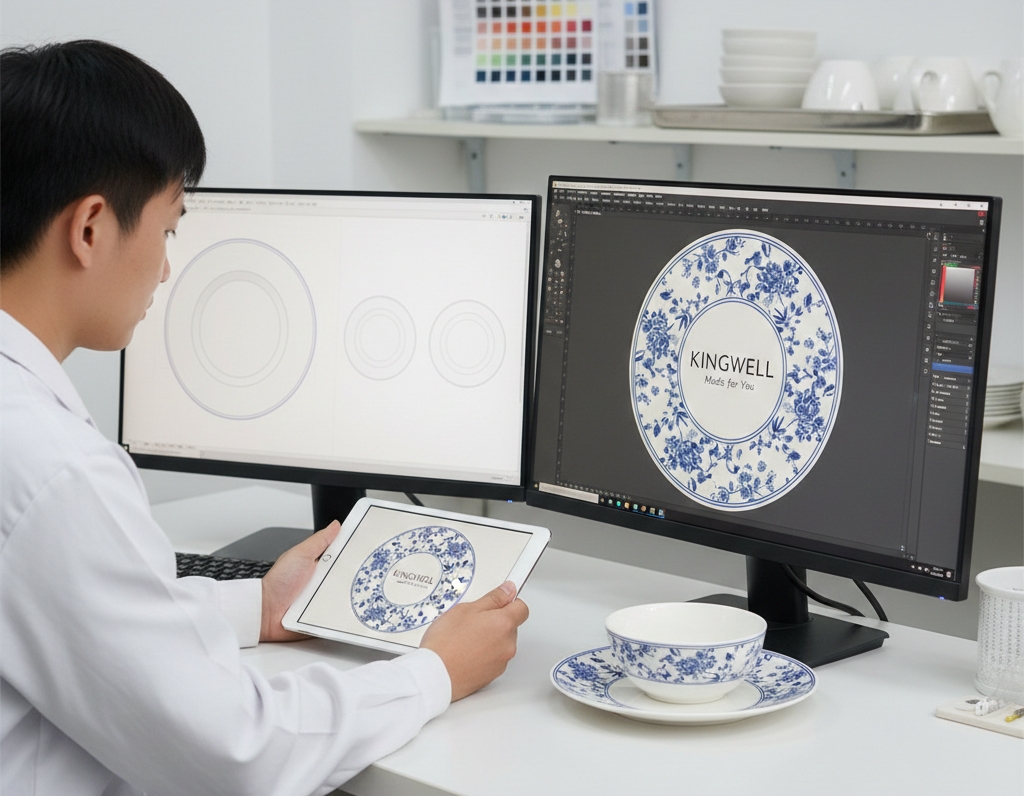
Melamine tableware decal technique
White Melamine Plates: The Unsung Hero of Every Kitchen & Dining Table