RMB/USD Exchange Rate Volatility: How Foreign Trade Enterprises Stabilize Orders & Protect Profits?
author: KINGWELL
2025-12-30
Published on: December 30, 2025 | Category: Foreign Trade Insights | Tags: RMB/USD Exchange Rate, Foreign Trade Risk Management, B2B Tableware Export, Kingwell Global Solutions
As of December 30, 2025, the RMB/USD exchange rate has rebounded to 6.998 (approximately 7.0), marking a 5.2% appreciation of the RMB against the US dollar since the start of 2025. This two-way fluctuation, with a volatility rate of around 12%, has become a key variable affecting the operation of foreign trade enterprises—especially for B2B tableware exporters focusing on the Euro-US market. For enterprises like Xiamen Kingwell (www.kingwellcn.com), which specializes in melamine/RPET tableware customization and wholesale, helping partners cope with exchange rate risks has become an important part of its full-chain foreign trade services.
The latest data from the General Administration of Customs shows that exchange rate fluctuations have caused a 3%-5% profit fluctuation for 68% of light industrial export enterprises (including tableware, textiles, and toys). For the tableware industry with an average gross profit margin of 5%-8%, even a 1% fluctuation in the RMB/USD exchange rate can erode 15%-20% of profits. How to navigate exchange rate volatility and achieve stable development has become a top priority for foreign trade enterprises.
Core Impacts of RMB/USD Exchange Rate Fluctuations on Foreign Trade Enterprises
The impact of exchange rate changes is directly reflected in order pricing, profit space, and capital turnover, with obvious differences between appreciation and depreciation cycles—especially for B2B tableware exporters targeting the Euro-US market.
1. RMB Appreciation (USD Depreciation): Pressure on Exporters, Benefits for Importers
For tableware exporters dominated by US dollar settlements, RMB appreciation brings dual pressures on price competitiveness and profit space:
-
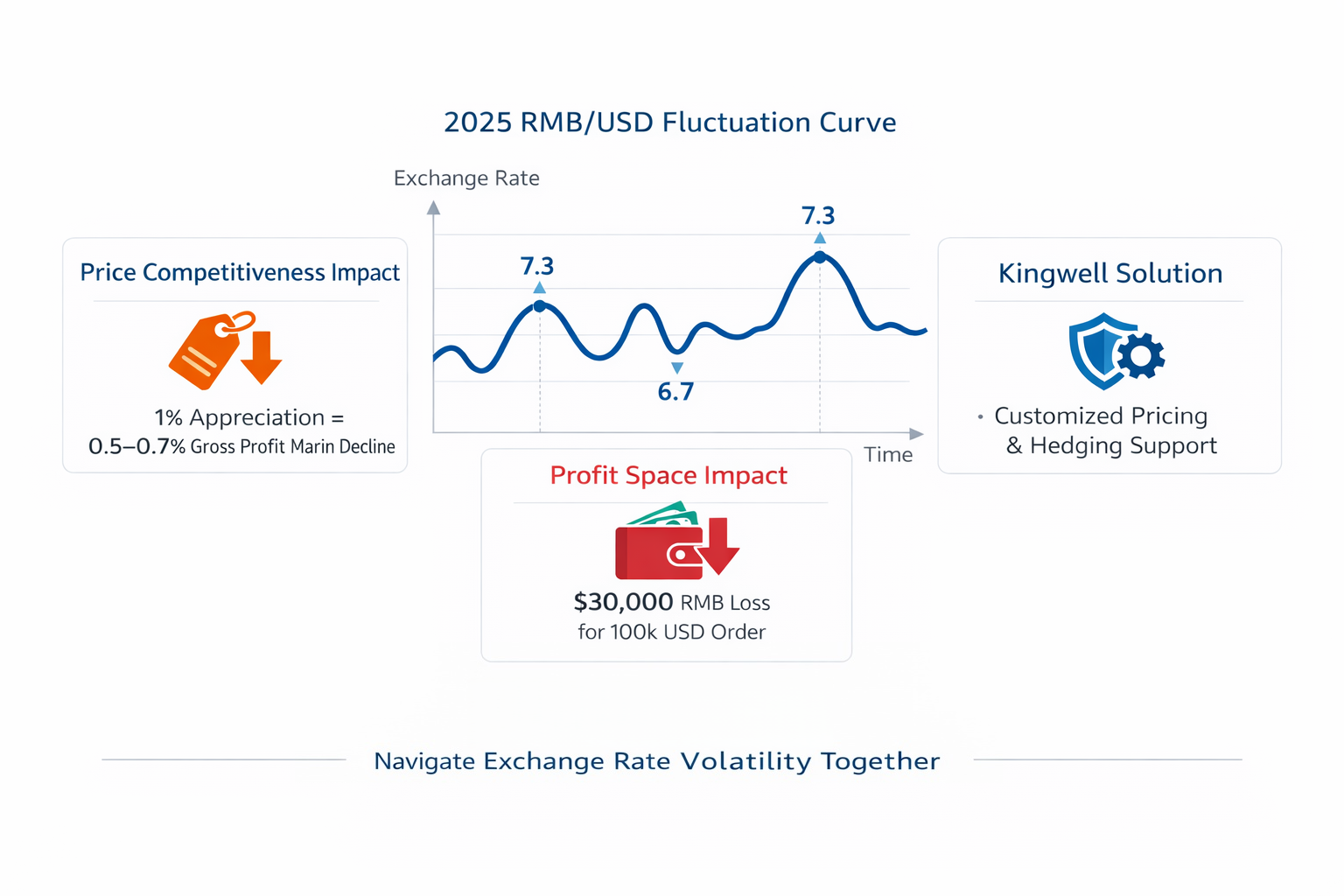
Weakened Price Competitiveness: Taking a 100,000 US dollar order for melamine tableware as an example, if the exchange rate was 7.3 when signing the contract (equivalent to 730,000 RMB in revenue), but drops to 7.0 when collecting payment, the enterprise will face a direct exchange loss of 30,000 RMB. To maintain profit levels, enterprises have to raise US dollar-denominated prices, which reduces their competitiveness compared to suppliers from Vietnam, Mexico, and other regions.
-
Compressed Profit Margins: The tableware industry has low barriers to entry and intense price competition. Every 1% appreciation of the RMB will reduce the gross profit margin of export enterprises by 0.5-0.7 percentage points. For small and medium-sized enterprises with thin profits, this may even lead to "losing money when receiving orders."
-
Extended Capital Turnover Cycle: Some European and American customers will delay payment to wait for more favorable exchange rates, leading to prolonged capital turnover for exporters and increased operational pressure.
In contrast, import-oriented enterprises (such as those importing RPET raw materials, melamine resin, and production equipment) benefit from RMB appreciation, as the cost of raw material procurement and equipment imports is directly reduced. For example, a tableware enterprise importing 1,000 tons of RPET particles can save about 120,000 RMB in costs if the RMB appreciates by 5%.
2. RMB Depreciation (USD Appreciation): Opportunities for Exporters, Pressure on Importers
RMB depreciation brings short-term dividends to tableware exporters:
-
Improved Price Competitiveness: The same US dollar-denominated price can be converted into more RMB, allowing enterprises to either maintain profits while reducing prices to expand market share, or keep prices unchanged to increase profit space.
-
Stimulated Order Growth: In the context of global inflation, cost-sensitive European and American customers are more inclined to choose cost-effective Chinese tableware products, driving an increase in export orders.
However, for enterprises that rely heavily on imported raw materials (such as RPET tableware manufacturers), RMB depreciation will increase procurement costs, which may offset part of the export profit growth.
Practical Strategies for Foreign Trade Enterprises to Cope with Exchange Rate Risks
Facing frequent exchange rate fluctuations, foreign trade enterprises need to combine short-term risk avoidance and long-term operational optimization to build a "protective shield" for profits. Based on years of experience in serving 150+ Euro-US B2B clients, Kingwell summarizes the following actionable strategies:
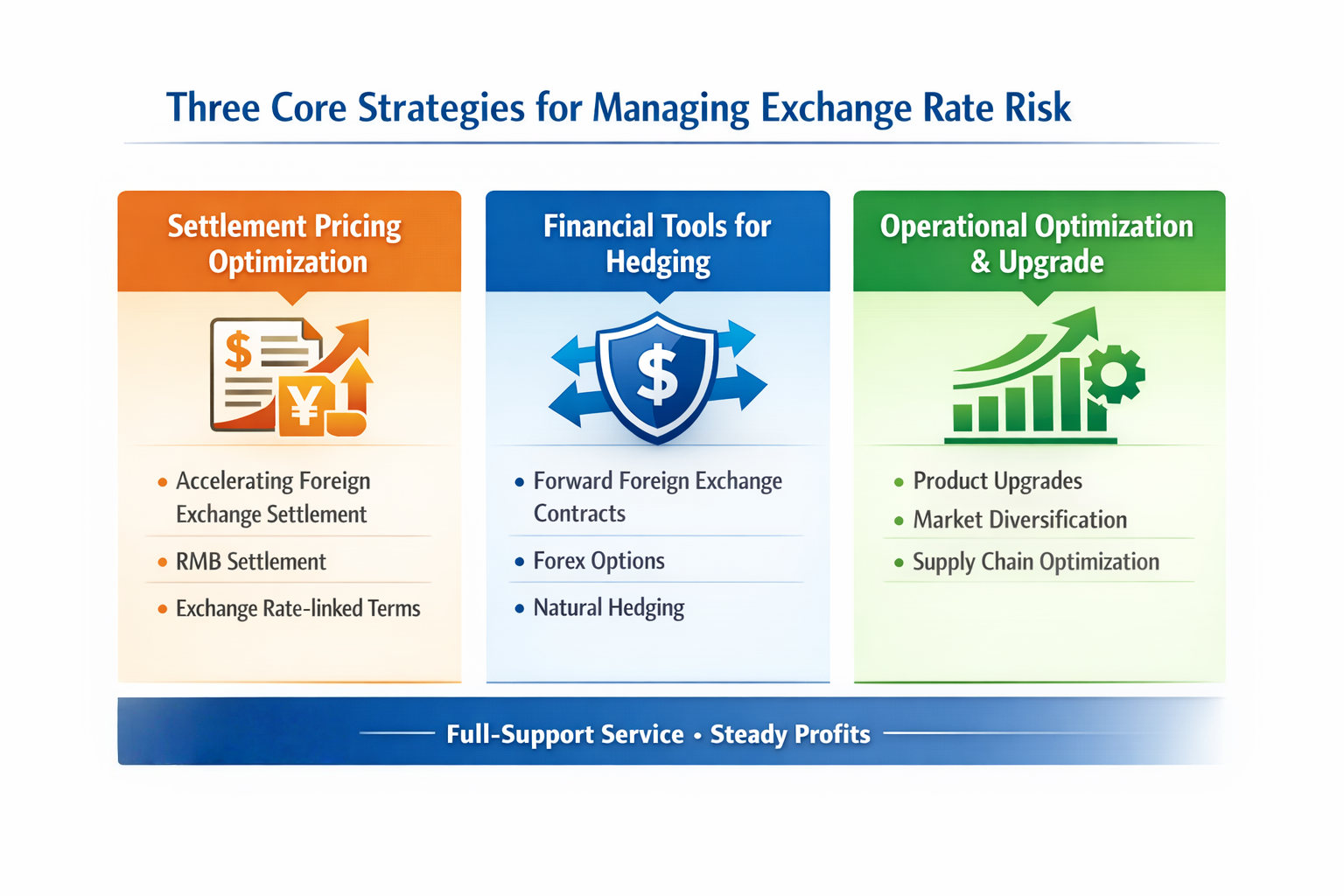
1. Optimize Settlement and Pricing Mechanisms
-
Accelerate Foreign Exchange Settlement: Settle foreign exchange immediately after receiving payment to avoid further exchange rate fluctuations. For large orders with a long payment cycle, negotiate with customers to adopt installment payment and settlement to reduce the risk of a single exchange rate fluctuation.
-
Promote RMB Settlement: With the continuous expansion of the cross-border RMB settlement system, actively promote RMB settlement in transactions with European and American clients. At present, the proportion of RMB settlement in China's goods trade has reached 30%, which can directly avoid exchange rate risks.
-
Set Up Exchange Rate Linkage Clauses: Add exchange rate fluctuation adjustment clauses in contracts. For example, if the RMB/USD exchange rate fluctuates by more than 2%, the product price will be adjusted accordingly. This mechanism is widely used in Kingwell's large-scale customized wholesale orders, effectively protecting the interests of both parties.
2. Use Financial Instruments for Risk Hedging
For enterprises with stable order volume, using financial instruments is an effective way to lock in exchange rate risks:
-
Forward Foreign Exchange Settlement and Sale: Sign a contract with a bank to lock in the exchange rate at a certain point in the future. For example, Kingwell helps small and medium-sized clients lock in the exchange rate for 3-6 months through cooperative banks, avoiding profit losses caused by sudden exchange rate changes.
-
Foreign Exchange Options: Pay a certain option fee to obtain the right to choose the exchange rate in the future, which can lock in the maximum loss while retaining the opportunity to benefit from favorable exchange rate fluctuations. It is suitable for enterprises with uncertain order quantities.
-
Natural Hedging: For enterprises that have both export and import businesses (such as tableware enterprises importing raw materials and exporting finished products), use US dollar income to directly pay for imported raw materials, reducing the number of exchanges and avoiding risks.
3. Optimize Operations to Enhance Risk Resistance
Long-term risk resistance lies in improving the core competitiveness of enterprises:
-
Product Upgrading: Increase the added value of products to enhance pricing power. For example, Kingwell's customized melamine tableware with antibacterial functions and RPET tableware with GRS certification have higher profit margins and stronger resistance to exchange rate fluctuations—customers are more willing to accept appropriate price adjustments for high-value-added products.
-
Market Diversification: Reduce reliance on the Euro-US market and expand to markets such as ASEAN and the Middle East where RMB settlement is widely accepted. This not only disperses exchange rate risks but also expands market space.
-
Supply Chain Optimization: Increase the proportion of domestic raw materials to reduce reliance on imports; for imported raw materials, diversify procurement sources to avoid the impact of a single currency fluctuation.
Kingwell's Support: Escort Foreign Trade Enterprises Through Exchange Rate Volatility
As a professional melamine/RPET tableware custom wholesale enterprise, Kingwell not only provides high-quality products but also integrates exchange rate risk management into its full-chain services to help partners stabilize operations:
-
Customized Pricing Solutions: According to the exchange rate trend and the client's order cycle, provide multi-currency quotation support (USD, EUR, RMB) and help design exchange rate linkage clauses to balance the interests of both parties.
-
Financial Cooperation Resources: Cooperate with major banks to provide clients with preferential foreign exchange hedging services (such as forward foreign exchange settlement and sale, foreign exchange options) and reduce the threshold and cost of hedging for small and medium-sized enterprises.
-
Efficient Capital Turnover Support: Shorten the production and delivery cycle (15-20 days for bulk orders) to accelerate capital turnover; for long-term cooperative clients, provide appropriate credit terms to ease capital pressure.
-
Market and Policy Insights: Regularly release exchange rate trend analysis and foreign trade policy updates, and provide one-on-one consulting services to help clients make timely adjustments to business strategies.
"Exchange rate volatility is both a challenge and an opportunity for foreign trade enterprises," said Jason Lin, CEO of Kingwell. "For tableware exporters, the key to coping with fluctuations is to improve product competitiveness while establishing a sound risk management system. Kingwell will continue to use our professional capabilities to help global partners achieve stable growth in the volatile market environment."
Outlook for 2026: Two-Way Fluctuation of RMB Exchange Rate Will Become Normal
Industry analysts predict that the RMB/USD exchange rate will maintain two-way fluctuation in 2026, with an annual volatility of 3%-5%. The main influencing factors include the Fed's monetary policy, Sino-US economic growth differences, and global geopolitical risks. Foreign trade enterprises should abandon the idea of "betting on exchange rates" and establish a long-term risk management mechanism.
To learn more about exchange rate risk management strategies for the tableware industry or Kingwell's custom wholesale solutions, please visit www.kingwellcn.com, apply for a free foreign trade risk assessment, or consult our professional team.
Kingwell RPET Tableware: Innovation, Quality & Environmental Commitment
Cross-Border E-Commerce for B2B Tableware: Kingwell’s Custom Wholesale Solutions Boost Euro-US Partners