Melamine tableware decal technique
author: Kingwell
2025-10-07
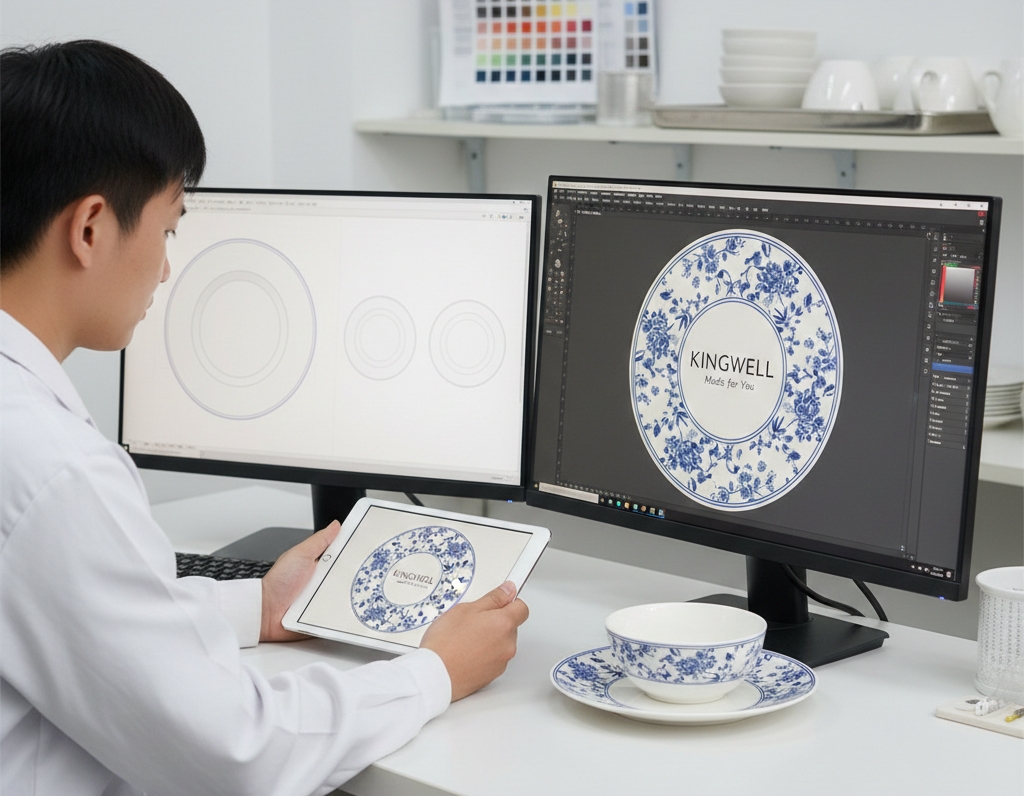
I. Decal Application Process: A Precise Workflow from Decal Preparation to Product Integration
The decal application process for Melamine tableware (melamine dinnerware) is a core link that balances aesthetics and durability, which can be divided into three key stages:
1. Decal Preparation: Laying the Foundation for Pattern Stability
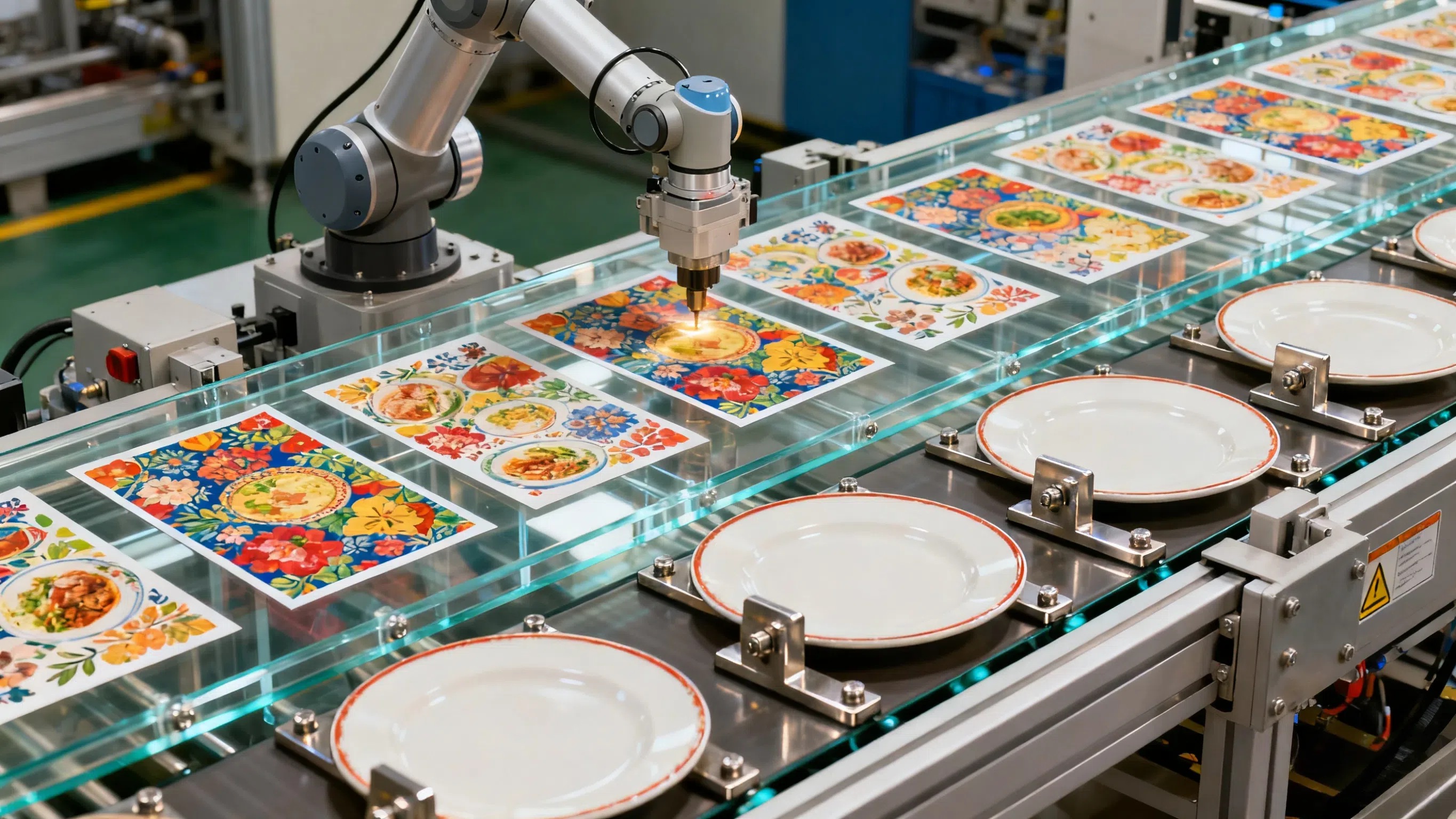
The first step in decal application requires selecting 37-60g long-fiber paper as the base material (short-fiber paper is prone to breakage and white staining). After patterns are printed using offset or screen printing techniques, the paper is placed in an oven at 70-100°C for 7-8 hours to completely evaporate the binders in the ink. Subsequently, a layer of melamine-formaldehyde resin (dissolved in water at a standard temperature of 95°C) is brushed on, and a protective film is formed after drying. To address the bubbling issue of curved tableware (such as mugs), the industry has developed 37g specialized decal paper; meanwhile, 60g opaque paper with added titanium dioxide solves the problem of color transparency.
2. Decal Integration: Molecular Bonding Under High Temperature and Pressure
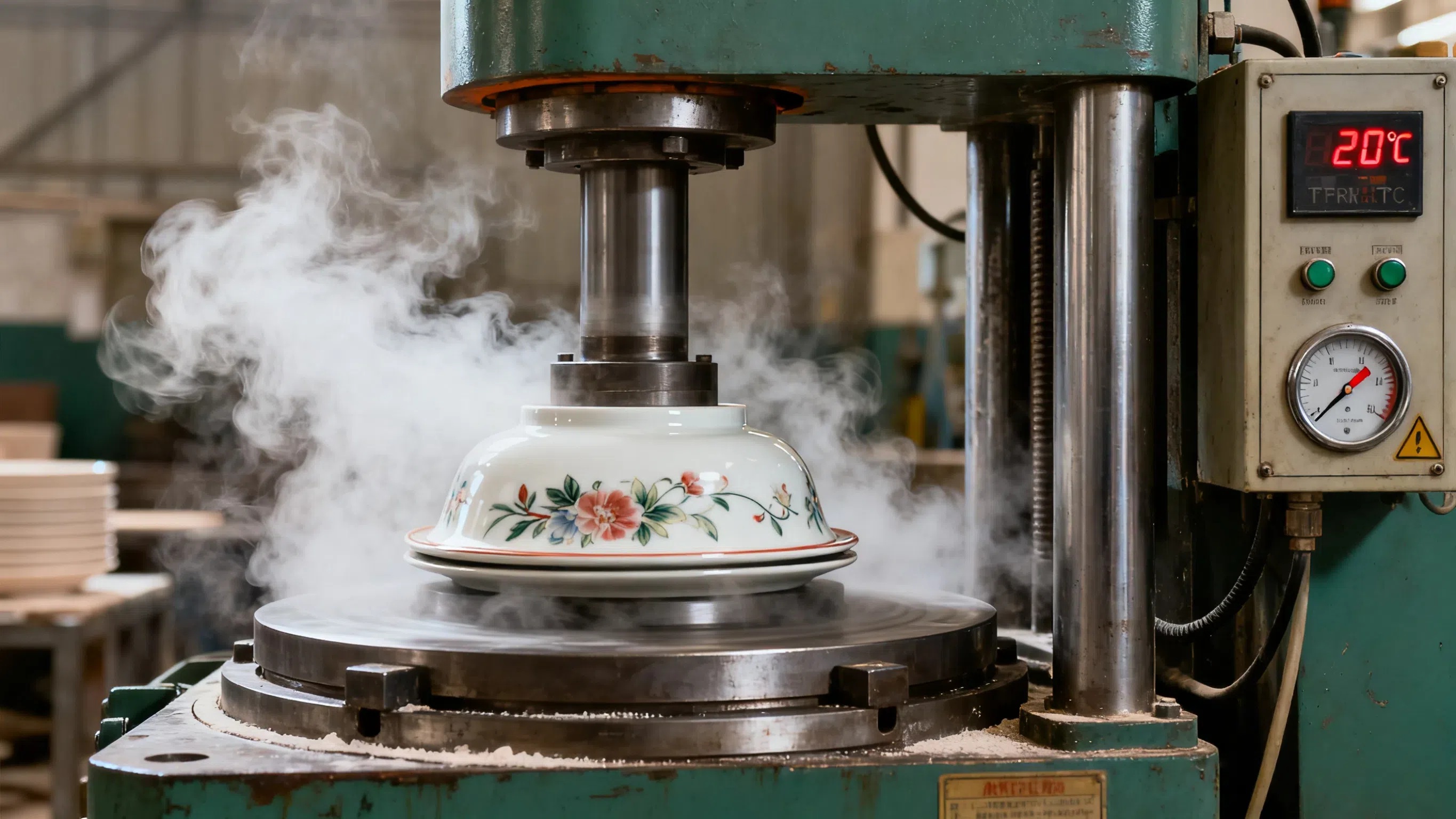
Molded plain tableware undergoes precise decal application: decal paper is first cut manually or by die-cutting, and curved tableware requires additional bonding treatment before the decal is accurately attached to the plain surface. The critical step lies in compression curing: the mold temperature is controlled at 160-165°C, with a pressure of 15-20 MPa applied, and the decal is fully integrated with the base material after 40-60 seconds. Finally, 2%-5% transparent overglaze powder (melamine powder) is sprinkled, followed by another 30-50 seconds of high-temperature curing to form a porcelain-like glossy protective layer.
3. Post-Processing: Enhancing Durability Through Detail Control
Finished products undergo rough grinding, fine grinding, and polishing to remove burrs, preventing skin scratches during use. A dual-quality inspection process focuses on checking for pattern bubbling, color transparency, and other defects, with unqualified products rejected.
II. Core of Safety: Triple Guarantees from Raw Materials, Standards, and Usage Scenarios
The safety of Melamine tableware is built on strict production regulations and international standards:
1. Intrinsic Safety from Raw Materials and Processes
Qualified products use Grade A5/A8 melamine resin, which is cured at 145-165°C under high pressure (25-35 MPa). This process forms stable macromolecular polymers from melamine and formaldehyde, which are insoluble in water at room temperature and do not release harmful substances. The use of overglaze powder not only enhances gloss but also creates a physical barrier to prevent pattern ink migration.
2. Rigid Constraints from International Regulatory Standards
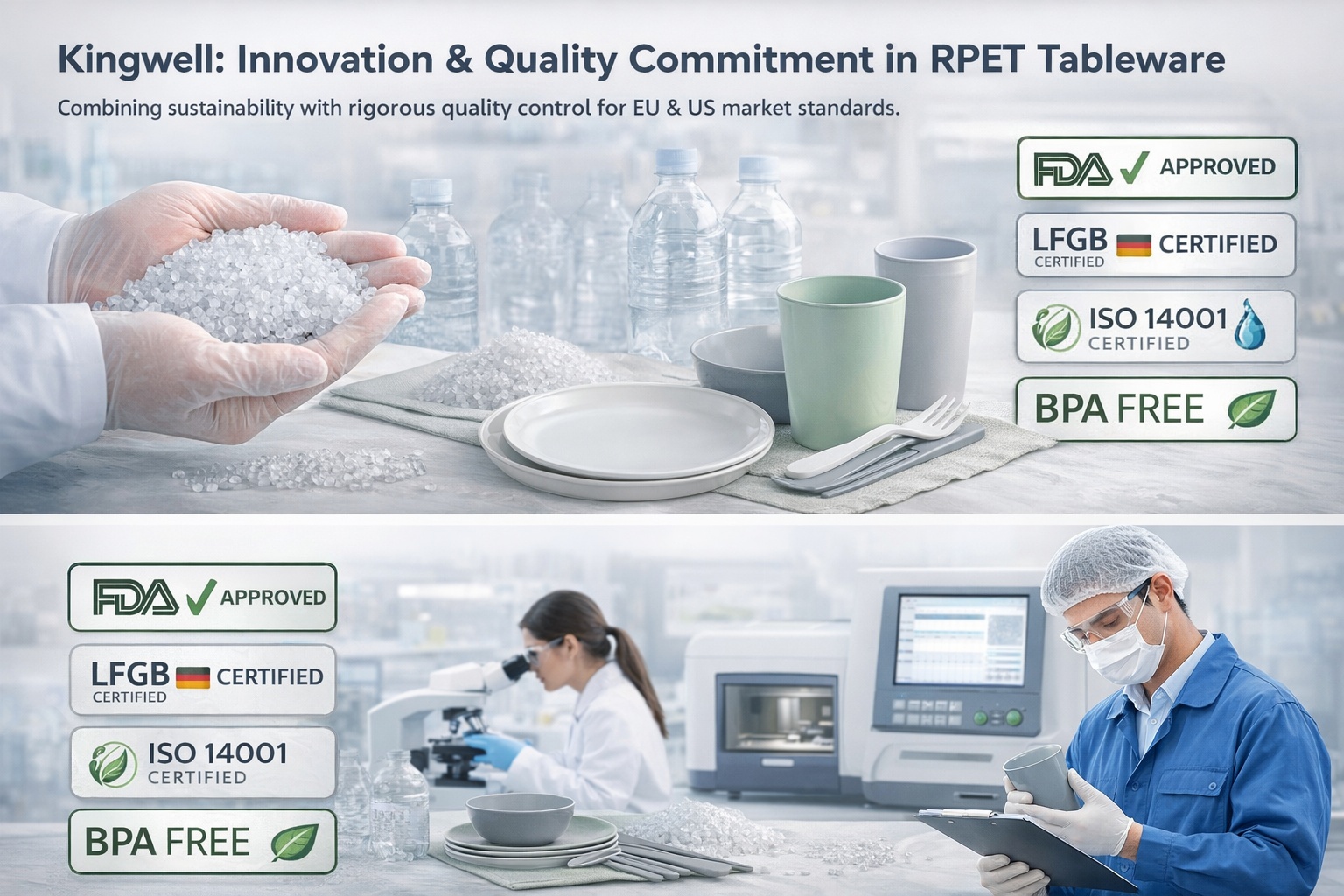
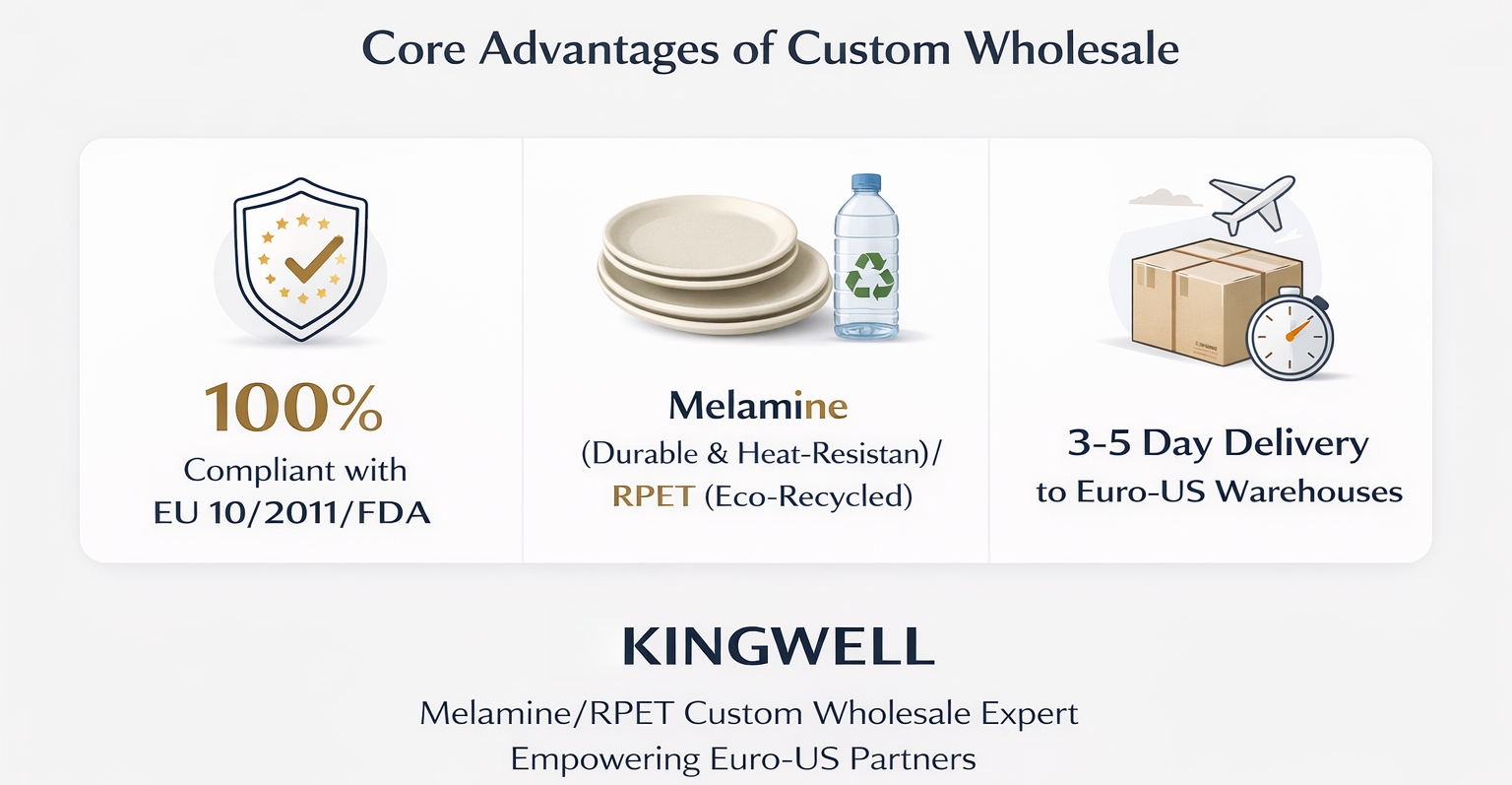
The European Union (EU) limits migration to ≤10mg/kg through the EU 10/2011 standard; the U.S. Food and Drug Administration (FDA) classifies Melamine as an "indirect food additive" and regulates residual limits; Canada even explicitly prohibits the sale of unqualified products. China, a major global producer of Melamine tableware, has also established general safety standards for food contact materials, implementing full-chain testing from raw materials to finished products.
3. Scenario Boundaries for Scientific Usage
Authoritative studies show that when temperatures exceed 70°C or contact with acidic substances above 3% occurs, the migration of harmful substances may accelerate. Therefore, the industry clearly warns: avoid microwave heating and open-flame baking, and do not store acidic foods (such as vinegar and lemon juice) for long periods. Under normal household usage scenarios (-20 to 120°C), compliant products can be used safely.
III. Industry Trends: Collaborative Upgrades of Safety and Design
Today, the decal application process is evolving toward balancing personalization and safety: enterprises can provide customized solutions such as full-surface decoration, central focal decoration, or edge decoration. Among these, edge decoration has become the first choice for catering institutions due to its wear resistance. Meanwhile, the application of innovative materials such as 37g ultra-thin decal paper and lead-free ink further reduces safety risks.
"As long as they pass compliance testing, Melamine tableware is completely harmless," experts from the China Plastics Processing Industry Association pointed out. Consumers can choose safe products by checking for FDA/EU certification marks and avoiding products with pungent odors.
2025 Eco-tableware Report: 28% Biodegradable Penetration, Bamboo Fiber Takes Center Stage
Growth Trajectory and Market Outlook of the Global Melamine Tableware Industry